

As a supplier of PP Safety Clamps, I often get asked about the suitability of our products in various industrial applications, especially in the paper - making industry. In this blog, I'll explore whether a PP Safety Clamp can be effectively used in paper - making equipment, considering factors such as the nature of paper - making processes, the properties of PP Safety Clamps, and potential challenges and benefits.
The Nature of Paper - Making Equipment and Processes
Paper - making is a complex industrial process that involves multiple stages, from pulping raw materials like wood chips, recycled paper, or other fibrous materials to forming, pressing, and drying the paper sheets. The equipment used in these processes includes large - scale machinery such as pulpers, refiners, paper machines, and drying cylinders. These machines operate under specific conditions, including high temperatures, high pressures in some cases, and exposure to various chemicals used in the pulping and bleaching processes.
Properties of PP Safety Clamps
PP, or polypropylene, is a thermoplastic polymer known for several key properties. Firstly, it has excellent chemical resistance. It can withstand exposure to many common chemicals used in the paper - making industry, such as acids, alkalis, and bleaching agents. This means that a PP Safety Clamp is less likely to corrode or degrade when in contact with these substances, ensuring its long - term durability in the paper - making environment.
Secondly, PP is lightweight. In paper - making equipment, where there are often moving parts and large - scale machinery, the use of lightweight components can reduce the overall weight of the equipment. This can lead to lower energy consumption during operation, as less power is required to move the equipment. Additionally, the lightweight nature of PP Safety Clamps makes them easier to install and handle, which can save time and labor costs during equipment maintenance and upgrades.
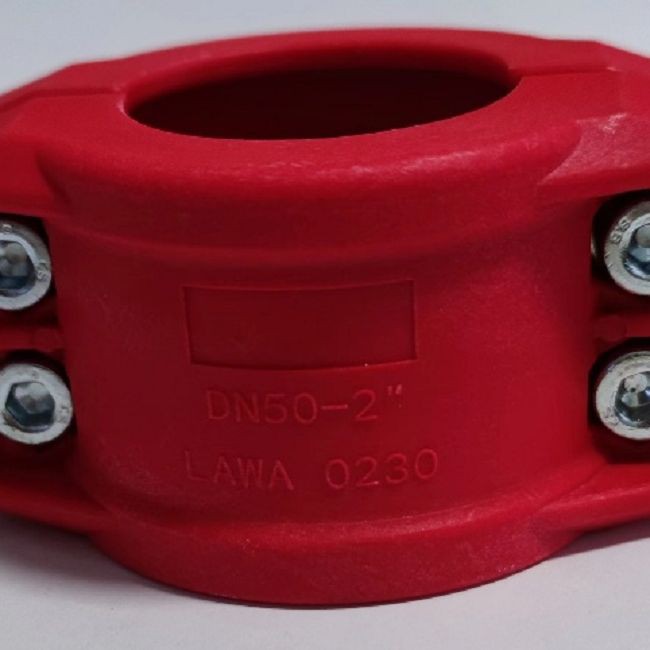
Another important property of PP is its flexibility. PP Safety Clamps can be designed to fit a variety of shapes and sizes, allowing for a more customized fit on different parts of the paper - making equipment. Whether it's clamping pipes, hoses, or other components, the flexibility of PP ensures a secure and tight fit, preventing leaks and ensuring the proper functioning of the equipment.
Potential Applications in Paper - Making Equipment
Pipe and Hose Connections
In paper - making equipment, there are numerous pipe and hose connections for transporting water, chemicals, and pulp. A PP Safety Clamp can be used to secure these connections, preventing leaks that could lead to product contamination or equipment damage. For example, in the chemical dosing systems, where precise amounts of chemicals are added to the pulp, a reliable clamp is essential to ensure accurate dosing and prevent spills. The chemical resistance of PP makes it an ideal choice for these applications, as it can withstand the corrosive nature of the chemicals being transported.
Component Fixing
Paper - making machines have many moving parts and components that need to be securely fixed in place. PP Safety Clamps can be used to hold these components together, ensuring proper alignment and operation. For instance, in the paper - forming section, where the pulp is spread and formed into a sheet, the clamps can be used to secure the forming wires and other components, preventing any misalignment that could affect the quality of the paper produced.

Sealing and Insulation
In some parts of the paper - making equipment, such as around drying cylinders or steam pipes, sealing and insulation are crucial. PP Safety Clamps can be used in combination with gaskets or other sealing materials to create a tight seal, reducing heat loss and improving energy efficiency. The flexibility of PP allows it to conform to the shape of the sealing surface, providing an effective seal even in irregularly shaped areas.
Challenges and Considerations
While PP Safety Clamps offer many advantages, there are also some challenges and considerations when using them in paper - making equipment. One of the main limitations is the relatively low temperature resistance of PP compared to some other materials. In parts of the paper - making process where high temperatures are involved, such as in the drying section, the PP Safety Clamp may deform or lose its clamping force if the temperature exceeds its melting point (around 160 - 170°C). In such cases, alternative materials like Aluminum Safety Clamp or SS316 Safety Clamp may be more suitable.
Another consideration is the mechanical strength of PP. Although PP is relatively strong, it may not be as strong as some metals in high - stress applications. In areas of the paper - making equipment where there are high - pressure or high - impact forces, the PP Safety Clamp may need to be carefully designed and sized to ensure it can withstand the load. Otherwise, there is a risk of the clamp breaking or failing, which could lead to equipment malfunction or safety hazards.
Comparison with Other Types of Safety Clamps
Aluminum Safety Clamps
Aluminum Safety Clamps are known for their high strength - to - weight ratio and good thermal conductivity. They are often used in applications where high temperatures are involved, as they can dissipate heat more effectively than PP. However, aluminum is more susceptible to corrosion in the presence of certain chemicals, especially acids and alkalis. In the paper - making industry, where chemical exposure is common, the chemical resistance of PP gives it an advantage over aluminum in many applications.
SS316 Safety Clamps
SS316 (stainless steel 316) Safety Clamps are highly resistant to corrosion and have excellent mechanical strength. They can withstand high temperatures and high - pressure applications. However, they are much heavier than PP Safety Clamps, which can increase the overall weight of the equipment and energy consumption. Additionally, stainless steel is more expensive than PP, which may be a consideration for cost - sensitive paper - making operations.
Conclusion
In conclusion, a PP Safety Clamp can be a suitable choice for many applications in paper - making equipment. Its chemical resistance, lightweight nature, and flexibility make it well - suited for tasks such as pipe and hose connections, component fixing, and sealing. However, it is important to consider the limitations of PP, such as its relatively low temperature resistance and mechanical strength, and choose the appropriate clamp based on the specific requirements of the application.
If you are in the paper - making industry and are considering using PP Safety Clamps in your equipment, I encourage you to contact us for more information. Our team of experts can help you determine the best clamp solution for your specific needs and provide you with high - quality products and excellent customer service. Whether you need a small quantity for a maintenance project or a large order for a new equipment installation, we are here to assist you.
References
- "Handbook of Paper - Making Technology"
- "Plastics in Industrial Applications: Properties and Performance"