

The aerospace industry is one of the most demanding and safety - critical sectors in the world. Every component used in aerospace applications must meet extremely high standards of reliability, durability, and performance. As a safety clamp supplier, I often get asked whether our safety clamps can be used in aerospace applications. In this blog post, I'll explore this question in detail, considering the unique requirements of the aerospace industry and the features of our safety clamps.
Requirements in Aerospace Applications
Aerospace applications have a set of very specific requirements. First and foremost, weight is a crucial factor. Every extra pound in an aircraft or a spacecraft can significantly increase fuel consumption and reduce payload capacity. Therefore, components need to be as lightweight as possible without sacrificing strength.
Secondly, materials used in aerospace must be able to withstand extreme environmental conditions. This includes high and low temperatures, high - altitude radiation, and rapid pressure changes. For example, during spaceflight, a spacecraft may experience temperatures ranging from - 270°C in the shadow of the Earth to over 120°C when exposed to direct sunlight.
Corrosion resistance is also vital. In aerospace, components are often exposed to harsh chemicals, such as fuels and oxidizers, as well as moisture and salt in the atmosphere. Corrosion can weaken materials and lead to component failure, which is unacceptable in such a safety - critical environment.
Our Safety Clamps: Types and Features
We offer a variety of safety clamps, each with its own set of features that may or may not make them suitable for aerospace applications.
Aluminum Safety Clamp
Our Aluminum Safety Clamp is known for its lightweight nature. Aluminum has a relatively low density compared to many other metals, which makes it an attractive option for applications where weight is a concern. It also has good corrosion resistance, especially when anodized. Anodizing is a process that creates a protective oxide layer on the surface of the aluminum, enhancing its resistance to corrosion.
However, aluminum has a lower melting point compared to some other metals. In high - temperature aerospace applications, such as near jet engines or during re - entry into the Earth's atmosphere, the aluminum safety clamp may not be able to withstand the extreme heat.
PP Safety Clamp
The PP Safety Clamp is made of polypropylene, a type of plastic. Polypropylene is extremely lightweight and has excellent chemical resistance. It can resist a wide range of chemicals, including many fuels and solvents, which is a significant advantage in aerospace applications where exposure to chemicals is common.
On the downside, polypropylene has relatively low mechanical strength compared to metals. It may not be suitable for applications where high clamping forces are required or where the clamp will be subject to significant mechanical stress. Also, polypropylene has a relatively low melting point and can degrade when exposed to high - energy radiation, which is a concern in space applications.
SS316 Safety Clamp
Our SS316 Safety Clamp is made of stainless steel 316. Stainless steel 316 is known for its high strength, excellent corrosion resistance, and good heat resistance. It can withstand a wide range of temperatures, from cryogenic temperatures in space to relatively high temperatures in some aerospace systems.
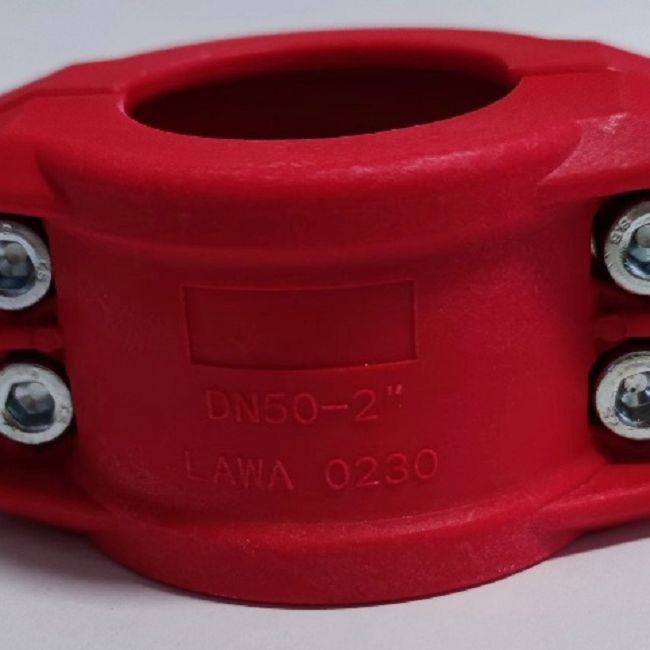

The high strength of SS316 allows it to provide reliable clamping forces, making it suitable for applications where components need to be securely held in place. However, stainless steel is heavier than aluminum and polypropylene, which may be a drawback in weight - sensitive aerospace applications.
Potential Applications in Aerospace
While each type of our safety clamp has its limitations, there are still potential applications in the aerospace industry.
The aluminum safety clamp can be used in non - critical, low - temperature areas of an aircraft or spacecraft. For example, it can be used to secure lightweight cables or hoses in areas where the temperature is relatively stable and the risk of corrosion is low.
The PP safety clamp can be used in applications where chemical resistance is the primary concern and the mechanical stress is low. It may be suitable for securing small plastic components or hoses in areas where exposure to fuels or other chemicals is likely.
The SS316 safety clamp is well - suited for high - stress and high - temperature applications. It can be used to secure critical components in jet engines, where high clamping forces and heat resistance are required. It can also be used in areas of a spacecraft that are exposed to harsh environmental conditions, such as the exterior of the vehicle.
Challenges and Solutions
One of the main challenges in using our safety clamps in aerospace applications is meeting the strict certification requirements. The aerospace industry has a complex set of regulations and standards that components must comply with. This includes material testing, performance testing, and quality control procedures.
To address this challenge, we are committed to working closely with aerospace customers. We can conduct additional testing on our safety clamps to ensure that they meet the specific requirements of each application. We can also provide detailed documentation and traceability of the materials used in the manufacturing process.
Another challenge is the need for continuous improvement. As the aerospace industry evolves, the requirements for components are also changing. We need to invest in research and development to improve the performance of our safety clamps, such as reducing weight while maintaining strength or enhancing corrosion resistance.
Conclusion
In conclusion, our safety clamps have the potential to be used in aerospace applications, but each type has its own advantages and limitations. The aluminum safety clamp offers lightweight and some corrosion resistance, the PP safety clamp provides excellent chemical resistance, and the SS316 safety clamp has high strength and heat resistance.
We understand the unique requirements of the aerospace industry and are dedicated to providing high - quality safety clamps that meet those needs. If you are in the aerospace industry and are interested in using our safety clamps, we invite you to contact us for further discussion and procurement. We are ready to work with you to find the best solution for your specific application.
References
- "Materials for Aerospace Applications" - A comprehensive guide on materials selection in the aerospace industry.
- "Aerospace Standards and Regulations" - An overview of the regulatory requirements for aerospace components.
- "Properties of Aluminum, Polypropylene, and Stainless Steel 316" - Technical literature on the physical and chemical properties of these materials.