

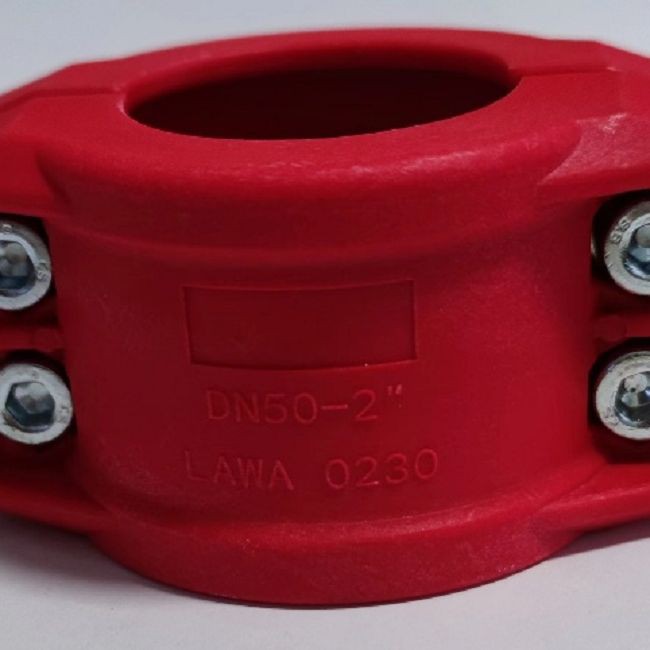
As a supplier of PP Safety Clamps, I often encounter inquiries about the abrasion resistance of these essential industrial components. Abrasion resistance is a crucial factor when it comes to the performance and longevity of safety clamps, especially in demanding environments where they are subjected to constant friction and wear. In this blog post, I will delve into the concept of abrasion resistance in PP Safety Clamps, exploring its significance, the factors that influence it, and how it compares to other types of safety clamps.
Understanding Abrasion Resistance
Abrasion resistance refers to a material's ability to withstand the wear and tear caused by friction when it comes into contact with other surfaces. In the context of PP Safety Clamps, abrasion resistance is vital because these clamps are frequently used in applications where they may rub against pipes, cables, or other equipment. Over time, this friction can cause the surface of the clamp to wear down, potentially compromising its structural integrity and functionality.
Significance of Abrasion Resistance in PP Safety Clamps
The abrasion resistance of a PP Safety Clamp directly impacts its performance and lifespan. A clamp with high abrasion resistance will maintain its shape and strength for a longer period, reducing the need for frequent replacements. This not only saves costs but also minimizes downtime in industrial operations. Additionally, a clamp that resists abrasion is less likely to generate debris or particles, which can be a concern in cleanroom or sensitive environments.
Factors Affecting the Abrasion Resistance of PP Safety Clamps
Several factors influence the abrasion resistance of PP Safety Clamps. One of the primary factors is the quality of the polypropylene (PP) material used in the manufacturing process. High-quality PP resins are formulated to have better resistance to abrasion compared to lower-grade materials. The manufacturing process also plays a crucial role. Clamps that are injection-molded with precision and have a uniform structure tend to have better abrasion resistance.
The design of the clamp can also affect its abrasion resistance. Clamps with smooth surfaces and rounded edges are less likely to cause or experience abrasion compared to those with sharp corners or rough textures. Additionally, the application environment, including the type of surfaces the clamp comes into contact with, the frequency of movement, and the presence of abrasive particles, can all impact the rate of abrasion.
Comparing Abrasion Resistance: PP vs. Other Materials
When considering the abrasion resistance of PP Safety Clamps, it's useful to compare them with safety clamps made from other materials, such as SS316 and aluminum. SS316 Safety Clamps are known for their high strength and corrosion resistance. They generally have excellent abrasion resistance, especially in harsh chemical environments. However, they are also heavier and more expensive than PP clamps.
Aluminum Safety Clamps are lightweight and have good corrosion resistance. Their abrasion resistance is decent, but it may not be as high as that of SS316 clamps. PP Safety Clamps, on the other hand, offer a good balance between cost, weight, and abrasion resistance. They are lightweight, which makes them easy to handle and install, and they are also relatively inexpensive. While their abrasion resistance may not be as high as that of SS316 clamps, they are suitable for many general industrial applications.

Testing the Abrasion Resistance of PP Safety Clamps
To ensure the quality and performance of our PP Safety Clamps, we conduct rigorous abrasion testing. One common method is the Taber Abraser test, which involves rotating the clamp against an abrasive wheel under a specified load for a set number of cycles. The weight loss of the clamp after the test is measured, and this provides an indication of its abrasion resistance. We also perform real-world simulations to test the clamps in actual application environments.
Applications Where Abrasion Resistance Matters
PP Safety Clamps with high abrasion resistance are suitable for a wide range of applications. In the automotive industry, they are used to secure hoses and cables, where they may be subjected to vibration and movement. In the construction industry, they are used to fasten pipes and electrical conduits, which can rub against each other or against building materials. In the food and beverage industry, where cleanliness is crucial, abrasion-resistant PP clamps are preferred as they are less likely to generate particles.
Maintaining the Abrasion Resistance of PP Safety Clamps
To maximize the abrasion resistance and lifespan of PP Safety Clamps, proper maintenance is essential. This includes regular inspections to check for signs of wear and tear. If any damage is detected, the clamps should be replaced immediately. It's also important to ensure that the clamps are installed correctly and that they are not over-tightened, as this can increase the risk of abrasion.
Conclusion
The abrasion resistance of a PP Safety Clamp is a critical factor that determines its performance and durability. By understanding the factors that influence abrasion resistance, comparing it with other materials, and conducting proper testing and maintenance, we can ensure that our PP Safety Clamps meet the highest standards of quality. Whether you are in the automotive, construction, or food and beverage industry, our PP Safety Clamps offer a reliable and cost-effective solution for your fastening needs.
If you are interested in learning more about our PP Safety Clamps or would like to discuss your specific requirements, please feel free to contact us. We are committed to providing you with the best products and services, and we look forward to the opportunity to work with you.
References
- ASTM International. (Year). Standard Test Method for Abrasion Resistance of Organic Coatings by the Taber Abraser. ASTM D4060.
- Plastics Industry Association. (Year). Properties and Applications of Polypropylene.