

What is the static electricity resistance of a PP Camlock Coupling?
As a supplier of PP Camlock Couplings, I've received numerous inquiries about the static electricity resistance of these products. Static electricity can be a significant concern in many industrial applications, especially those involving the transfer of flammable liquids or gases. In this blog post, I'll delve into the static electricity resistance of PP Camlock Couplings, exploring the factors that affect it and how it compares to other types of camlock couplings.
Understanding Static Electricity and Its Risks
Static electricity is the result of an imbalance of electric charges within or on the surface of a material. When two materials come into contact and then separate, electrons can be transferred from one material to the other, creating a static charge. In industrial settings, static electricity can build up during the transfer of liquids or gases through pipes and couplings. If the static charge is not properly dissipated, it can lead to sparks, which can ignite flammable substances, causing fires or explosions.
Static Electricity Resistance of PP Camlock Couplings
PP, or polypropylene, is a thermoplastic polymer that is widely used in the manufacturing of camlock couplings due to its excellent chemical resistance, lightweight, and low cost. However, polypropylene is also a non-conductive material, which means it can easily accumulate static charges. When a PP Camlock Coupling is used to transfer a liquid or gas, the friction between the fluid and the coupling can generate static electricity. If the static charge is not dissipated, it can pose a significant safety risk.
To address this issue, some PP Camlock Couplings are treated with anti-static additives or coatings. These additives or coatings help to reduce the surface resistance of the coupling, allowing the static charge to be dissipated more easily. The effectiveness of these treatments can vary depending on the type and concentration of the additive or coating used, as well as the operating conditions.
Factors Affecting Static Electricity Resistance
Several factors can affect the static electricity resistance of a PP Camlock Coupling. These include:

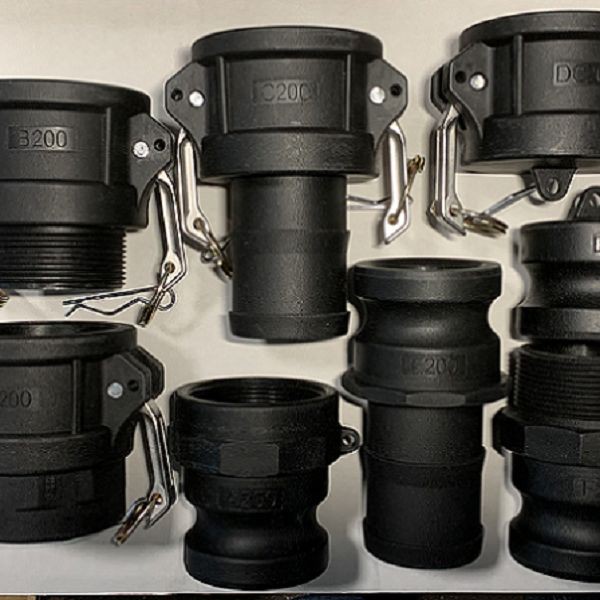
- Material Properties: The type of polymer used in the coupling, as well as its molecular structure and surface finish, can affect its static electricity resistance. For example, a coupling made from a more conductive polymer or one with a rougher surface finish may have better static dissipation properties.
- Fluid Properties: The properties of the fluid being transferred, such as its conductivity, viscosity, and flow rate, can also affect the generation and dissipation of static electricity. For example, a highly conductive fluid may help to dissipate static charges more quickly, while a viscous fluid may generate more static electricity due to increased friction.
- Operating Conditions: The temperature, humidity, and pressure of the operating environment can also affect the static electricity resistance of a PP Camlock Coupling. For example, low humidity conditions can increase the likelihood of static charge buildup, while high temperatures can reduce the effectiveness of anti-static treatments.
Comparing PP Camlock Couplings with Other Types
When it comes to static electricity resistance, PP Camlock Couplings may not be the best choice for applications where static dissipation is critical. Other types of camlock couplings, such as Aluminum Camlcok Coupling and SS316 Camlock Coupling, are made from conductive materials and have better static dissipation properties.
Aluminum camlock couplings are lightweight and have good electrical conductivity, making them a popular choice for applications where static electricity is a concern. SS316 camlock couplings, on the other hand, are made from stainless steel, which is highly conductive and resistant to corrosion. Both of these types of couplings are often used in industries such as oil and gas, chemical processing, and food and beverage.
However, PP Camlock Couplings still have their advantages. They are more affordable than aluminum and stainless steel couplings, and they offer excellent chemical resistance, making them suitable for a wide range of applications. In some cases, the risk of static electricity can be mitigated through proper grounding and the use of anti-static additives or coatings.
Ensuring Safety with PP Camlock Couplings
To ensure the safe use of PP Camlock Couplings in applications where static electricity is a concern, it's important to take the following precautions:
- Grounding: Proper grounding is essential for dissipating static charges. Make sure that the coupling and the equipment it is connected to are properly grounded.
- Anti-Static Treatments: Consider using PP Camlock Couplings that have been treated with anti-static additives or coatings. These treatments can help to reduce the surface resistance of the coupling and improve its static dissipation properties.
- Regular Inspections: Regularly inspect the coupling for signs of wear, damage, or contamination. Replace any damaged or worn couplings immediately.
- Training: Provide proper training to employees on the safe use of PP Camlock Couplings, including the risks of static electricity and the importance of proper grounding.
Conclusion
In conclusion, the static electricity resistance of a PP Camlock Coupling can vary depending on several factors, including the material properties, fluid properties, and operating conditions. While PP Camlock Couplings may not be the best choice for applications where static dissipation is critical, they can still be used safely in many applications with proper precautions. By understanding the risks of static electricity and taking the necessary steps to mitigate them, you can ensure the safe and efficient operation of your equipment.
If you're interested in learning more about our PP Camlock Coupling or have any questions about static electricity resistance, please don't hesitate to contact us. We're here to help you find the right coupling for your application and ensure your safety.
References
- "Static Electricity in Industrial Processes: Principles and Applications" by John R. Melcher
- "Polymer Science and Technology" by Charles E. Carraher Jr.
- "Handbook of Chemical Resistance" by P. A. Schweitzer