

Stress-corrosion cracking (SCC) is a significant concern in various industries, especially when it comes to components that are exposed to harsh environments and mechanical stresses. As a supplier of SS316 Safety Clamps, understanding the stress-corrosion cracking resistance of these products is crucial for both our customers and our business. In this blog, we will explore what stress-corrosion cracking is, why it matters for SS316 Safety Clamps, and how our products are designed to resist it.
Understanding Stress-Corrosion Cracking
Stress-corrosion cracking is a form of degradation that occurs when a material is subjected to a combination of tensile stress and a corrosive environment. This combination can lead to the formation and propagation of cracks over time, which can ultimately result in the failure of the component. SCC is a complex phenomenon that depends on several factors, including the material composition, the nature of the corrosive environment, the level of stress, and the temperature.
The corrosive environment can vary widely, from simple aqueous solutions to more complex chemical mixtures. Common corrosive agents include chlorides, sulfur compounds, and acids. Tensile stress can be either applied externally, such as through mechanical loading, or internally, such as residual stress from manufacturing processes like welding or cold working.
Importance of SCC Resistance for SS316 Safety Clamps
SS316 Safety Clamps are used in a wide range of applications, from industrial piping systems to marine environments. In these applications, they are often exposed to corrosive substances and mechanical stresses. If a safety clamp is susceptible to SCC, it can compromise the integrity of the entire system. For example, in a piping system, a cracked safety clamp may lead to leaks, which can cause environmental hazards, production downtime, and even safety risks to personnel.
Therefore, having high SCC resistance is essential for SS316 Safety Clamps. It ensures the long - term reliability and safety of the systems in which they are installed. This not only protects the end - users from potential failures but also enhances our reputation as a reliable supplier.
What is SS316 and Its Inherent SCC Resistance
SS316, also known as AISI 316, is a type of austenitic stainless steel. It contains chromium, nickel, and molybdenum as its main alloying elements. Chromium forms a passive oxide layer on the surface of the steel, which provides general corrosion resistance. Nickel enhances the ductility and toughness of the steel, while molybdenum improves its resistance to pitting and crevice corrosion in chloride - containing environments.
Compared to other stainless steels, SS316 has relatively good stress - corrosion cracking resistance. The molybdenum content plays a significant role in this. Molybdenum helps to stabilize the passive film on the surface of the steel, making it more resistant to the initiation and propagation of cracks in the presence of chlorides. However, it is important to note that SS316 is not completely immune to SCC, especially under certain extreme conditions.
Factors Affecting the SCC Resistance of SS316 Safety Clamps
1. Chemical Composition
The exact chemical composition of the SS316 used in our safety clamps can have a significant impact on its SCC resistance. Small variations in the content of elements such as chromium, nickel, and molybdenum can affect the stability of the passive film and the overall corrosion resistance. We ensure that our SS316 Safety Clamps are manufactured using high - quality raw materials with consistent chemical compositions to maintain optimal SCC resistance.
2. Manufacturing Processes
The manufacturing processes used to produce the safety clamps can introduce residual stresses. For example, welding can create high - stress zones due to the rapid heating and cooling cycles. Cold working, such as bending or forming, can also induce residual stresses. These residual stresses, when combined with a corrosive environment, can increase the likelihood of SCC. To mitigate this, we use advanced manufacturing techniques that minimize residual stresses. For instance, we perform stress - relieving heat treatments after processes that may introduce significant stress.

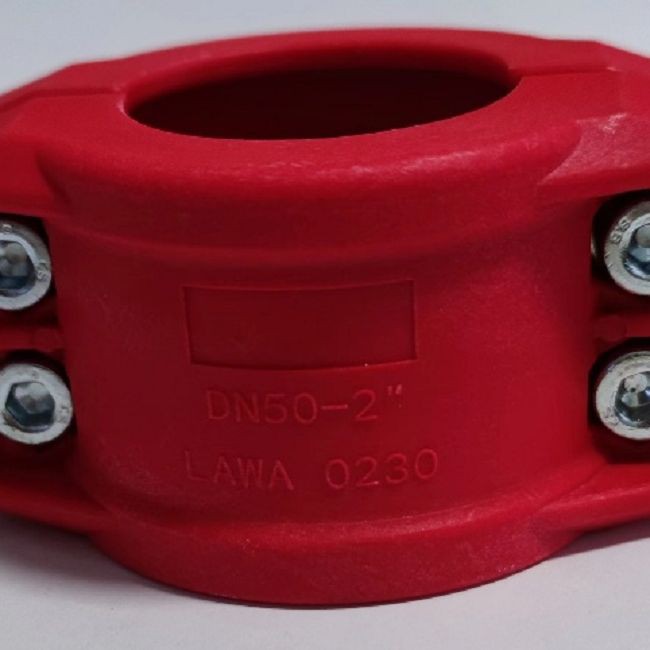
3. Environmental Conditions
The nature of the environment in which the SS316 Safety Clamps are used is a critical factor. The presence of chlorides, high temperatures, and high humidity can all increase the risk of SCC. In marine environments, for example, the high chloride content in seawater is a major concern. While SS316 has good resistance to chlorides, prolonged exposure to high - concentration chloride solutions can still lead to SCC. Additionally, elevated temperatures can accelerate the corrosion process and increase the mobility of the corrosive species, making SCC more likely.
Our Efforts to Enhance SCC Resistance
As a supplier of SS316 Safety Clamps, we take several measures to enhance the stress - corrosion cracking resistance of our products.
1. Material Selection
We source our SS316 from reputable suppliers who adhere to strict quality control standards. We conduct thorough inspections of the raw materials to ensure that they meet our specifications for chemical composition and mechanical properties. This ensures that our safety clamps have a solid foundation for good SCC resistance from the start.
2. Advanced Manufacturing
Our manufacturing processes are designed to minimize residual stresses. We use precision machining techniques to ensure accurate dimensions and smooth surfaces, which can reduce stress concentrations. After manufacturing processes that may introduce stress, such as welding, we perform stress - relieving heat treatments. These heat treatments help to relax the internal stresses in the material, reducing the risk of SCC.
3. Surface Treatment
In some cases, we apply surface treatments to our SS316 Safety Clamps to further enhance their corrosion resistance. For example, we may use passivation treatments to remove iron contaminants from the surface and enhance the formation of the passive oxide layer. This can improve the overall resistance of the clamps to SCC.
Comparison with Other Types of Safety Clamps
When it comes to safety clamps, there are different materials available, such as Aluminum Safety Clamps and PP Safety Clamps.
Aluminum safety clamps are lightweight and have good corrosion resistance in some environments. However, they are more susceptible to pitting corrosion and may not have the same level of SCC resistance as SS316 in chloride - containing environments. PP safety clamps, made of polypropylene, are non - metallic and are resistant to many chemicals. But they have lower mechanical strength compared to SS316, and they may not be suitable for applications where high mechanical stresses are involved.
In summary, SS316 Safety Clamps offer a good balance between mechanical strength, corrosion resistance, and SCC resistance, making them a popular choice for a wide range of applications.
The Bottom Line and Call to Action
In conclusion, the stress - corrosion cracking resistance of SS316 Safety Clamps is a critical property that ensures their long - term reliability and safety in various applications. Our commitment to using high - quality materials, advanced manufacturing processes, and appropriate surface treatments allows us to provide SS316 Safety Clamps with excellent SCC resistance.
If you are looking for reliable SS316 Safety Clamps for your project, we are here to help. Our team of experts can provide you with detailed information about our products and how they can meet your specific requirements. Please reach out to us for procurement discussions. We are eager to work with you to ensure the success of your projects.
References
- Uhlig, H. H., & Revie, R. W. (1985). Corrosion and Corrosion Control: An Introduction to Corrosion Science and Engineering. Wiley.
- ASM Handbook Committee. (1996). ASM Handbook, Volume 13A: Corrosion: Fundamentals, Testing, and Protection. ASM International.
- Scully, J. R. (1990). The Fundamentals of Corrosion. Pergamon Press.