

Hey there! As a supplier of PP Safety Clamps, I often get asked about the Young's modulus of these nifty little devices. So, I thought I'd take a deep dive into what the Young's modulus is, why it matters for PP Safety Clamps, and how it compares to other types of safety clamps.
First off, let's break down what the Young's modulus actually is. In simple terms, it's a measure of a material's stiffness or elasticity. When you apply a force to a material, it will deform to some extent. The Young's modulus tells you how much the material will deform under a given amount of stress. It's calculated by dividing the stress (force per unit area) by the strain (the ratio of the change in length to the original length).
Mathematically, it's expressed as E = σ/ε, where E is the Young's modulus, σ is the stress, and ε is the strain. A high Young's modulus means the material is stiffer and will deform less under stress, while a low Young's modulus indicates a more flexible material that will deform more easily.
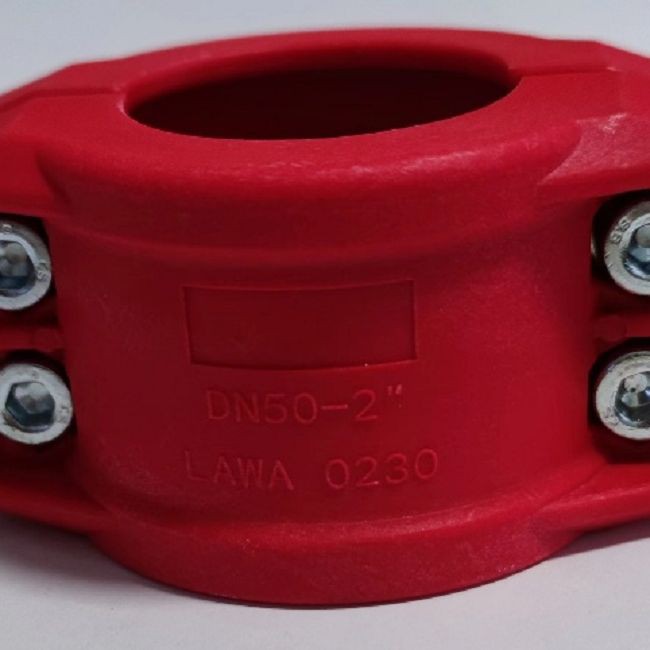
Now, let's talk about PP Safety Clamps. PP stands for polypropylene, which is a type of thermoplastic polymer. Polypropylene is known for its lightweight, chemical resistance, and relatively low cost. These properties make it a popular choice for a wide range of applications, including safety clamps.
The Young's modulus of polypropylene typically ranges from about 1.1 to 1.6 GPa (gigapascals). This means that compared to some other materials, like metals, polypropylene is relatively flexible. For safety clamps, this flexibility can be an advantage in certain situations. For example, it allows the clamp to conform to irregularly shaped objects without causing damage.
But why does the Young's modulus matter for safety clamps? Well, it's all about ensuring that the clamp can do its job effectively. When you're using a safety clamp, you want it to hold securely without breaking or deforming too much. If the Young's modulus is too low, the clamp might not be able to provide enough holding force, and it could slip off. On the other hand, if the Young's modulus is too high, the clamp might be too rigid and could damage the object it's holding.
Let's compare PP Safety Clamps to some other types of safety clamps. We've got Aluminum Safety Clamp and SS316 Safety Clamp. Aluminum has a Young's modulus of around 70 GPa, and SS316 (stainless steel 316) has a Young's modulus of about 193 GPa. As you can see, these metals are much stiffer than polypropylene.
Aluminum safety clamps are lightweight and corrosion-resistant, but they're also more rigid than PP clamps. This can be an advantage when you need a clamp to hold a heavy or large object firmly. However, they might not be as suitable for applications where you need a more flexible clamp.
SS316 safety clamps are even stiffer and more durable than aluminum clamps. They're often used in high-stress applications, such as in the marine or chemical industries. But they're also heavier and more expensive than PP clamps.
So, when should you choose a PP Safety Clamp? If you're working with lightweight or delicate objects, or if you need a clamp that can conform to irregular shapes, a PP Safety Clamp might be the way to go. They're also a great option if you're on a budget or if you need a clamp that's resistant to chemicals.

On the other hand, if you're dealing with heavy or high-stress applications, you might want to consider an Aluminum Safety Clamp or an SS316 Safety Clamp. These clamps can provide the strength and rigidity you need to hold your objects securely.
As a supplier of PP Safety Clamps, I can offer you a wide range of options to meet your specific needs. Whether you're looking for a small, lightweight clamp for a DIY project or a large, heavy-duty clamp for industrial use, we've got you covered.
If you're interested in learning more about our PP Safety Clamps or if you have any questions about the Young's modulus or other properties of our products, don't hesitate to reach out. We're here to help you find the right clamp for your application.
In conclusion, the Young's modulus is an important property to consider when choosing a safety clamp. It can help you determine how stiff or flexible the clamp will be and whether it will be suitable for your specific needs. Whether you choose a PP Safety Clamp, an Aluminum Safety Clamp, or an SS316 Safety Clamp, make sure you understand the properties of the material and how they will affect the performance of the clamp.
If you're ready to start shopping for safety clamps, head over to our website and check out our selection of PP Safety Clamps. And if you have any questions or need help choosing the right clamp, just let us know. We're always happy to assist you.
References
- Callister, W. D., & Rethwisch, D. G. (2018). Materials Science and Engineering: An Introduction. Wiley.
- Ashby, M. F., & Jones, D. R. H. (2012). Engineering Materials 1: An Introduction to Properties, Applications and Design. Butterworth-Heinemann.