

Are PP Safety Clamps resistant to salt spray?
Hey there! I'm a supplier of PP Safety Clamps, and I often get asked this question: Are PP Safety Clamps resistant to salt spray? Well, let's dive right in and explore this topic together.

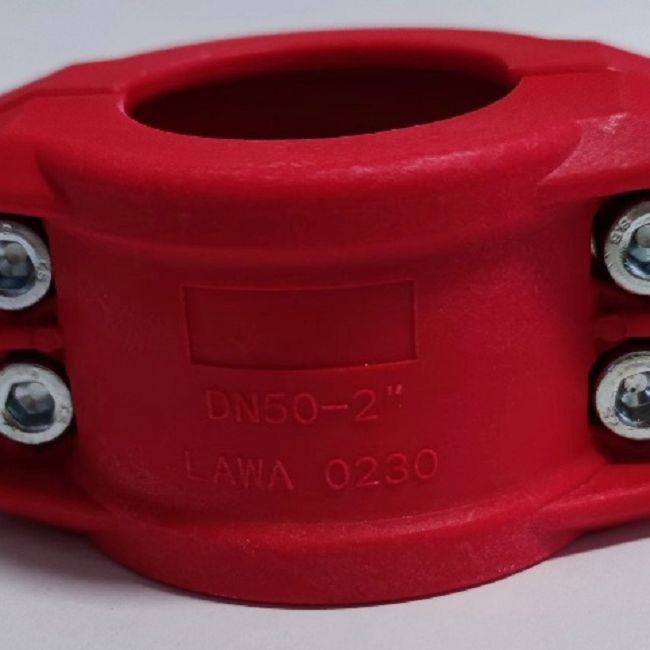
First off, let's understand what salt spray is and why it's a concern. Salt spray is basically a mixture of tiny salt droplets suspended in the air. It's commonly found in coastal areas, near industrial facilities that use salt in their processes, and even on roads during winter when salt is used for de - icing. The presence of salt in the air can cause corrosion and damage to various materials over time.
Now, let's talk about PP (Polypropylene) Safety Clamps. PP is a type of thermoplastic polymer that's known for its many great properties. It's lightweight, flexible, and has good chemical resistance. But when it comes to salt - spray resistance, how does it fare?
PP has a relatively high resistance to a wide range of chemicals, including mild acids and alkalis. Salt spray is mainly composed of sodium chloride (NaCl) dissolved in water droplets. PP's molecular structure doesn't react easily with sodium chloride. The polymer chains in PP are held together by strong covalent bonds, which are not easily disrupted by the ions present in salt spray.
This means that in normal salt - spray environments, PP Safety Clamps can hold up really well. They won't corrode like metals do. For example, if you compare them to SS316 Safety Clamp, which is made of stainless steel, while SS316 is also corrosion - resistant, it can still be affected by pitting corrosion in the long - term exposure to high - concentration salt spray.
On the other hand, Aluminum Safety Clamp is more prone to corrosion in salt - spray conditions. Aluminum forms a thin oxide layer on its surface, which provides some protection. But in the presence of salt spray, this oxide layer can break down, leading to accelerated corrosion.
PP Safety Clamps, however, don't have this problem. They don't rely on a protective oxide layer. Instead, their resistance comes from the inherent chemical stability of the polypropylene material.
But it's important to note that the salt - spray resistance of PP Safety Clamps also depends on the quality of the manufacturing process. If the clamps are made with high - quality PP resin and are properly molded, they'll have better resistance. Poorly made PP clamps might have areas with weak spots or impurities, which could potentially reduce their salt - spray resistance over time.
Another factor to consider is the duration and intensity of salt - spray exposure. In a mild coastal environment where the salt - spray concentration is relatively low, PP Safety Clamps can last for a really long time without significant degradation. But if they're exposed to high - intensity salt spray, like in an industrial salt - processing plant or on a ship deck near the ocean, the performance might vary.
In some cases, additional protective coatings can be applied to PP Safety Clamps to further enhance their salt - spray resistance. These coatings can act as an extra barrier between the clamp and the salt - spray environment. However, this comes with an additional cost, and it needs to be evaluated based on the specific application requirements.
If you're in an industry that requires reliable safety clamps in salt - spray environments, PP Safety Clamps could be a great option. They're cost - effective compared to metal alternatives, and they offer consistent performance in terms of salt - spray resistance. You can check out our PP Safety Clamp product page to learn more about our offerings.
So, if you're looking for safety clamps that can withstand salt - spray conditions without breaking the bank, don't hesitate to reach out. Whether you're in the marine industry, coastal construction, or any other field where salt - spray is a concern, our PP Safety Clamps can meet your needs. Drop us a line to start a conversation about your specific requirements.
References
- "Polypropylene: Properties and Applications" by Polymer Science Press
- "Corrosion Resistance of Engineering Materials" by Material Research Institute.